
Online Stores & Marketplaces
Ecommerce Website Developer & Designer in Nigeria
We build online stores for Nigerian businesses, on WooCommerce or as a custom build, with Paystack, Flutterwave, Monnify and Opay payments, delivery options and an admin dashboard for your products, stock and orders. Stores start from ₦400,000.
IMT Computers · Ikeja, Lagos
Our Client Results


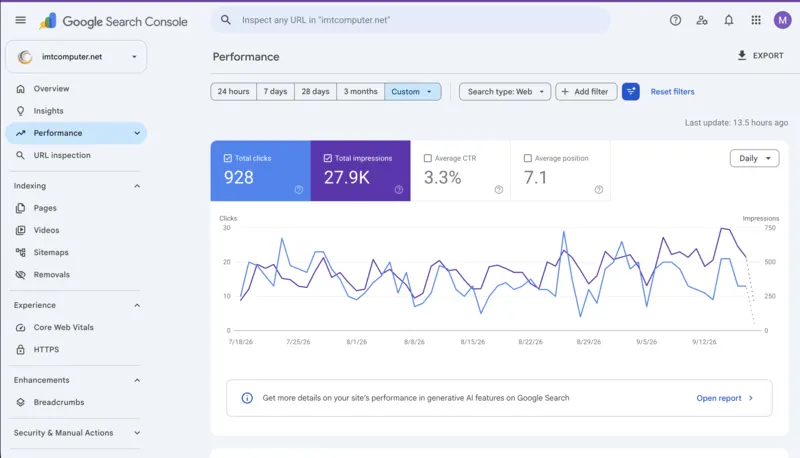
Google Search Console, the two months since the rebuild launched (18 Jul to 17 Sep 2026): 928 clicks, 27.9K impressions, average position 7.1.
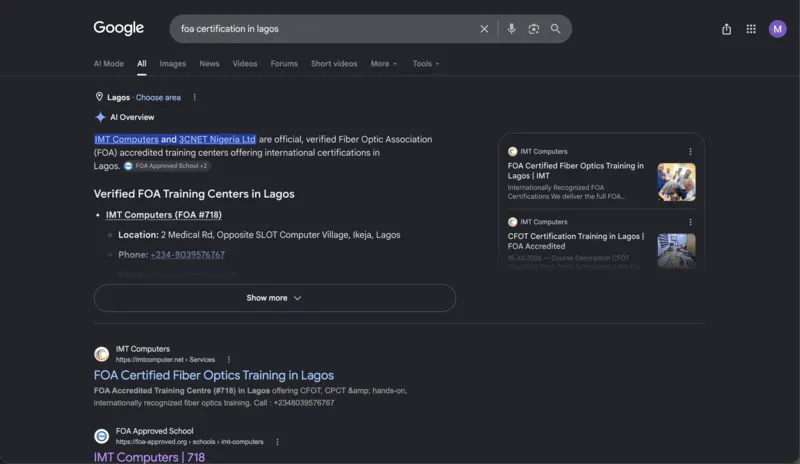
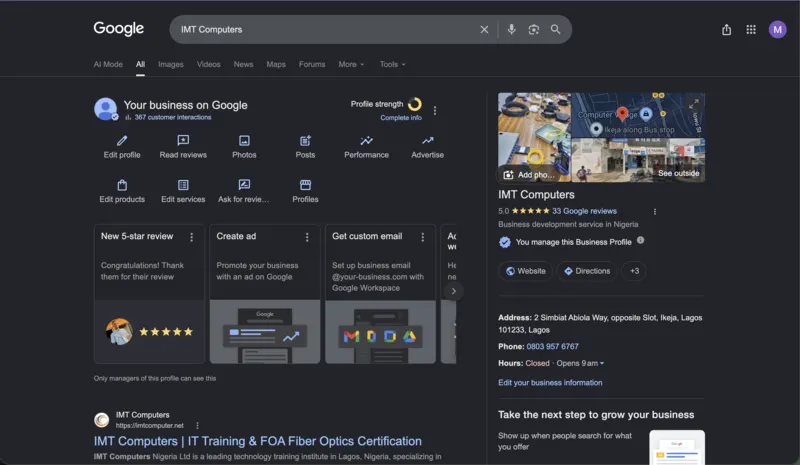
Real screenshots from a site we rebuilt and optimise. Read the IMT Computers case study


6+Years of work experience
Ecommerce Website Design
An Ecommerce Website Design Company in Nigeria
Website Developer Tech is an ecommerce website developer in Lagos, Nigeria. We build WooCommerce stores and fully custom online stores, and we will tell you honestly which one your business actually needs rather than selling you the more expensive option by default. Every store is built to order, so the catalogue, the checkout and the admin dashboard fit the way you actually sell.
We integrate the payment gateways Nigerian customers already trust. Paystack, Flutterwave, Monnify and Opay handle local cards and bank transfers, and we add Stripe or PayPal when you sell to customers abroad. Orders, stock levels and customer records all sit in a dashboard you control, and every store includes at least two months of hands-on SEO after launch.
Your Store, Your Dashboard
Add products, change prices, update stock and see orders yourself, with no developer and no monthly plugin licence for the basics.
Built for Mobile Shoppers
Most Nigerian shoppers arrive on a phone, often on mobile data, so product pages and checkout are built mobile-first.
Payments
Payment Gateway Integration for Nigerian Online Stores
An online store only works if customers can pay the way they already pay. We integrate the gateways Nigerian shoppers recognise and trust, and we set them up properly rather than leaving you with a test key and a prayer.
-
Paystack integration
The default choice for most Nigerian stores. Cards, bank transfers and USSD, with settlement straight to your business account. We handle the webhook setup so orders in your dashboard always match what actually cleared.
-
Flutterwave integration
Useful when you sell beyond Nigeria, because it handles multiple currencies alongside local payment methods. We configure it for both, so a Lagos customer and a London customer each get a checkout that makes sense to them.
-
Monnify and Opay
Increasingly common with Nigerian SMEs, particularly for dedicated virtual accounts and transfer-first customers who prefer not to enter card details. We add these alongside your main gateway rather than instead of it.
-
Stripe and PayPal for international sales
If your customers are in the US, UK or Canada, these are what they expect to see at checkout. We run them in parallel with your Nigerian gateway so you are not forcing an overseas buyer through a local flow.
Every integration includes failed-payment handling, order confirmation emails, and a reconciliation view in your admin dashboard, so you can see at a glance which orders are paid, pending or abandoned.
WooCommerce
WooCommerce Development in Nigeria
WooCommerce is the ecommerce plugin for WordPress, and it powers a large share of the online stores running in Nigeria today. For a lot of businesses it is the right answer: you get a proven cart and checkout, a familiar admin, and a plugin ecosystem for almost anything you need later.
When WooCommerce is the right choice
If you are selling a manageable catalogue, want to be live sooner rather than later, and would rather spend your budget on stock and marketing than on development, WooCommerce gets you a proper store without a custom build. It also suits you if your team already knows WordPress, because the learning curve is close to zero.
When a custom build makes more sense
Once you are running thousands of products, several unrelated departments, or a checkout flow that does not look like a normal shop, WooCommerce starts needing plugin after plugin to keep up, and each one is another thing that can break on update. That is the point where a custom build costs less over time, not more.
What we do on a WooCommerce project
- Store setup and theme work, so the shop, category and product pages fit your catalogue instead of a demo, kept update-safe so a theme release does not undo it.
- Payment gateways configured properly, with Paystack, Flutterwave, Monnify or Opay wired to your account and tested with real transactions before launch.
- Product structure for variations, sizes, colours and stock, set up once so your team is not creating duplicate products for every variant.
- Speed and security, because a WooCommerce store carries more weight than a brochure site and most Nigerian shoppers arrive on mobile data.
- Ongoing maintenance, since a store handling payments should never sit on unpatched plugins.
We also take over existing WooCommerce stores that were set up badly, are slow, or were abandoned by whoever built them. Comparing WordPress with a custom build for a normal website rather than a store? See our WordPress website design page.
Custom Builds
Custom Ecommerce Development, Not a Template
Most ecommerce websites in Nigeria are a bought theme with a shop plugin bolted on. That is fine until your catalogue grows, your categories stop fitting the template, or you need a checkout step the theme was never designed for. Then every change becomes a fight.
We build custom online stores in Laravel instead. The product structure, the category navigation and the checkout are designed around your catalogue, so a store with many unrelated departments stays easy to browse and to manage.
What a custom ecommerce build gives you
- A catalogue that fits your products. Variations for size, colour and storage, each with its own price and stock, under a single listing rather than duplicated across a dozen fake products.
- A checkout designed to be finished. Fewer steps, clearer delivery options, and no forced account creation. Checkout is where most Nigerian stores lose the sale, and it is the first thing we look at.
- An admin dashboard built for your workflow. Add products, adjust prices, update stock, view orders and export customer records yourself, without a developer and without a monthly plugin licence.
- Room to grow. Adding a department, a new payment method or a delivery partner is a development task, not a reason to rebuild the whole store.
If you want a straightforward single-brand store, we build that too. The point is that the build fits the business rather than the business bending to fit a theme.
Store Features
Ecommerce Development Features
The parts every store needs to run day to day, set up for how Nigerian customers buy.
-
Delivery zones and pickup
Different delivery fees for different parts of Lagos and other states, or pickup from your shop, calculated at checkout so customers see the full price before they pay.
-
Customer accounts and order tracking
Customers can register, see past orders and track their current order, while guest checkout stays available for first-time buyers.
-
Stock and sales reports
See what is selling, what is running low and how much came in this week from your dashboard, so you never oversell an item you no longer have.
-
Paid, pending and abandoned orders
A clear view of which orders cleared, which are waiting on payment and which were abandoned at checkout, so your team knows who to follow up.
-
Product SEO
Category and product pages with unique titles and descriptions, product structured data and fast, compressed images, so your products can be found on Google.
-
Order confirmation emails
Automatic emails for every order, to the customer and to you, with the items, amount and delivery details.
How We Do It
How We Build Ecommerce Websites: Our 9-Step Process
Every online store goes through the same nine steps, from studying the stores you compete with to SEO support after launch.
-
Step 01
Business & Competitor Research
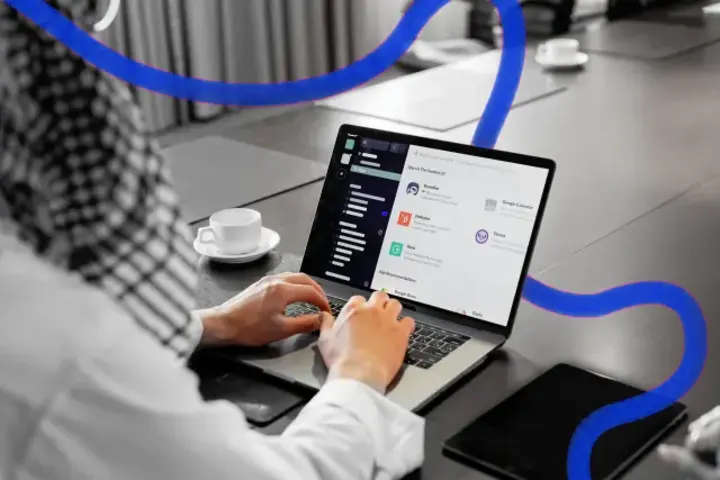
We start with how you sell today: your products, margins, stock, delivery areas and how customers currently order, whether in a shop, on Instagram or on WhatsApp. Then we study the online stores that already rank for your products: how their catalogues are organised, how many steps their checkout takes, what they charge for delivery and how fast they load on a phone.

-
Step 02
Product & Category Keyword Research
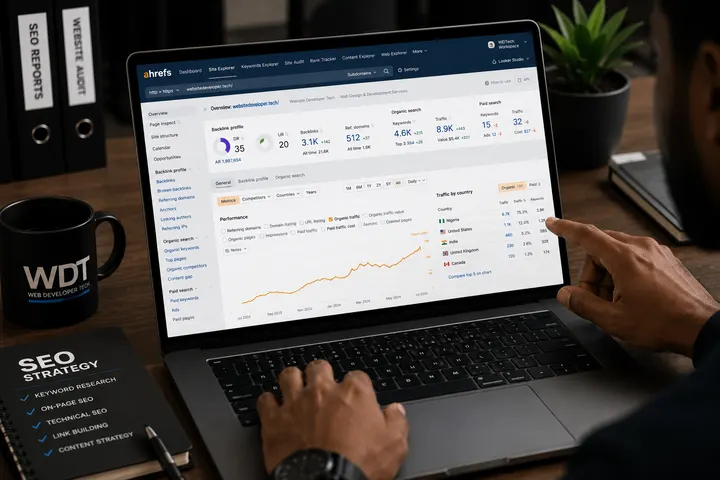
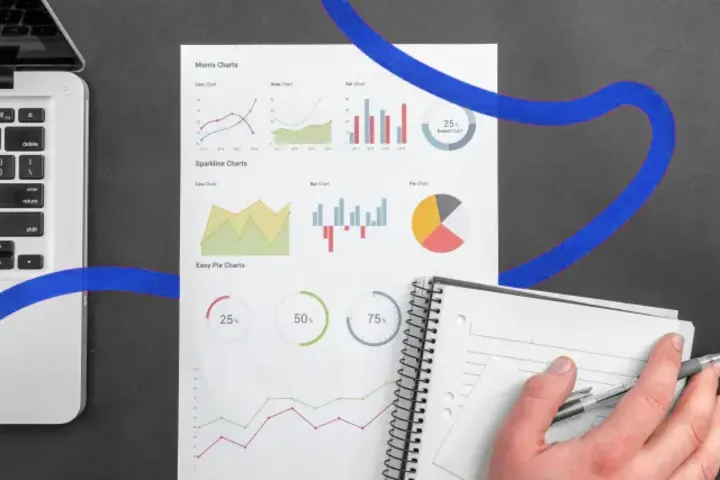
We find the searches shoppers actually make, such as "buy ankara fabric online", "iPhone 13 price in Lagos" or "baby clothes delivery in Abuja", and map them to your category and product pages. Category pages target broad searches and product pages target specific ones, so your own pages never compete with each other.
-
Step 03
Store Architecture: WooCommerce or Custom
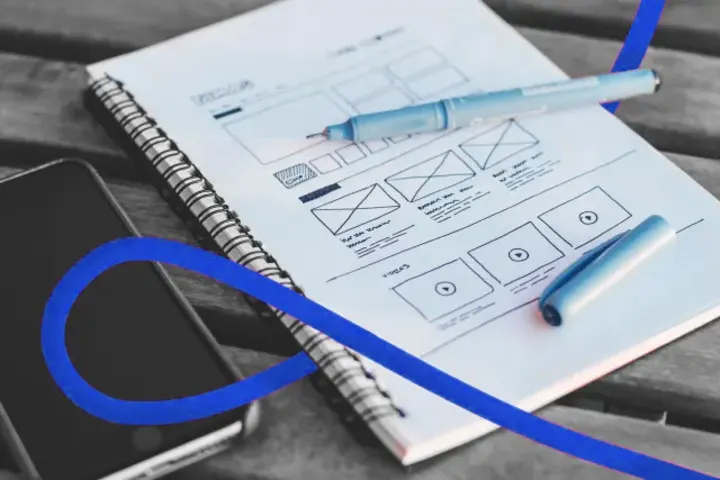
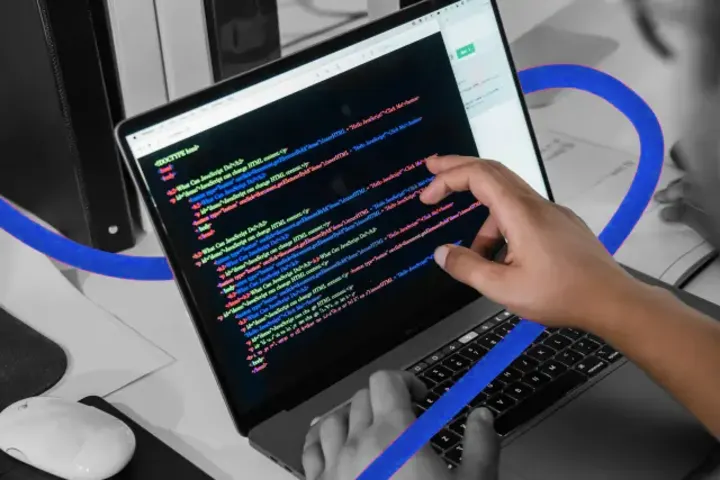
We recommend WooCommerce or a custom Laravel build based on your catalogue size, departments and checkout needs, and explain why. Then we plan categories, filters, product variations, delivery zones and the checkout flow before building a fast, mobile-first store with short, readable product URLs.
-
Step 04
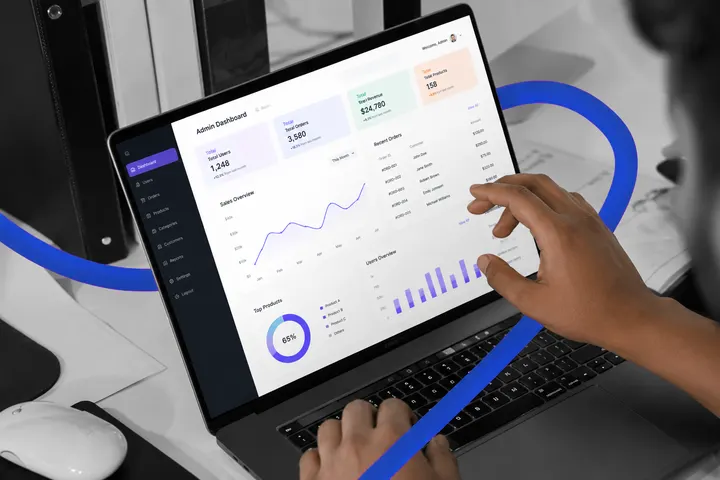
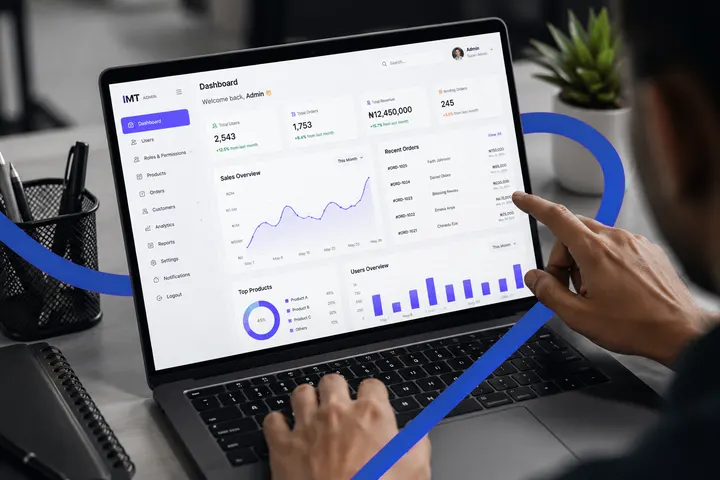
Admin Dashboard for Products & Orders
Your store comes with an admin dashboard for adding products and variations, changing prices, updating stock, processing orders and exporting customer records. We set it up with your real products and show your team how to use it before launch. See how our admin dashboard works.
-
Step 05
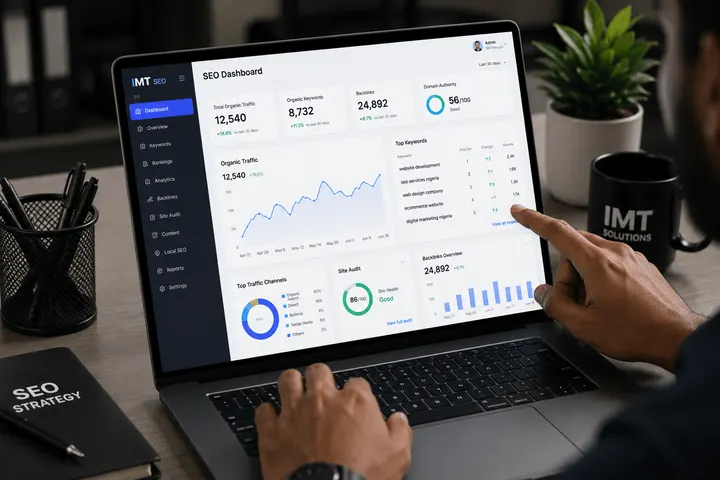
Payment Gateway Setup
We connect Paystack, Flutterwave, Monnify or Opay to your business account, plus Stripe or PayPal if you sell abroad, with webhooks so every order in your dashboard matches the money that actually cleared. Failed and abandoned payments are handled rather than left as mystery orders.
-
Step 06
Technical SEO for Products
Every category and product page gets a unique title and description, a canonical URL to prevent duplicate variants, product structured data and compressed images with descriptive names and alt text. We create the XML sitemap so Google can find every product.
-
Step 07
Security & Checkout Testing
The store runs on HTTPS. Before launch we place real test orders through every payment method and delivery option, check confirmation emails and stock updates, and test the checkout on the phones and mobile networks your customers use.
-
Step 08
Launch & Search Console
We launch on your domain, redirect any old product and page addresses so existing rankings are kept, connect Google Search Console and Analytics, submit your sitemap and check that product pages can be indexed.
-
Step 09
Google Business Profile & SEO Support
If you have a shop or pickup point, we set up your Google Business Profile so nearby shoppers find you on Maps. Then we keep improving your product and category pages for at least two months after launch, using Search Console data to push the pages closest to page one.
Case Studies
Real Client Websites. Real Results.
A few of the websites we have designed, built and optimised, and what they achieved for the businesses behind them.
-
BUSINESS WEBSITE
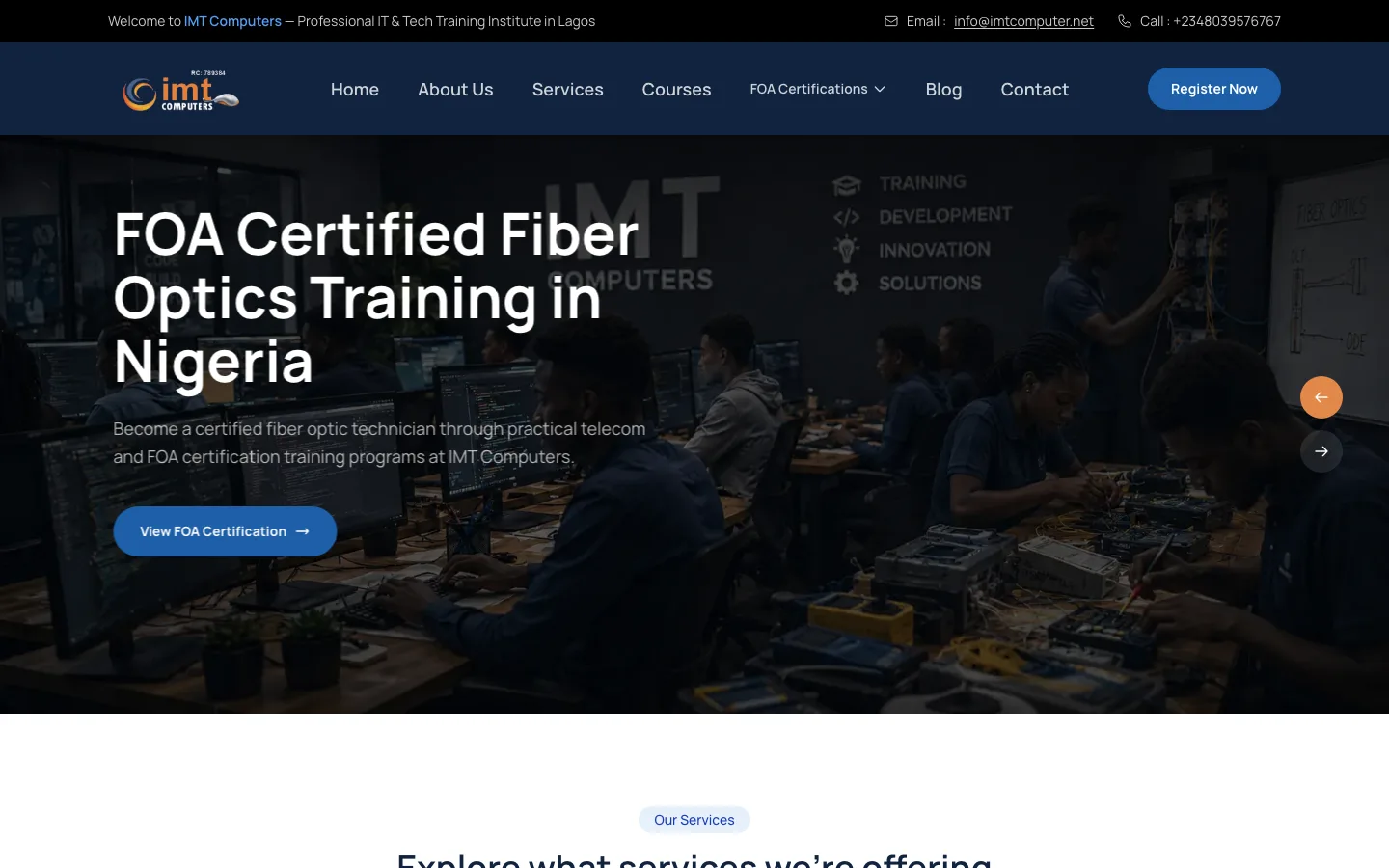
IMT Computers
Developed an SEO-optimized business and training website for an FOA-accredited IT institute, with a full course catalogue, online student registration and an admin dashboard the team runs entirely themselves.
46Registrations in 10 Days
PAGE 1Google Rankings
-
FINANCIAL TOOLS PLATFORM
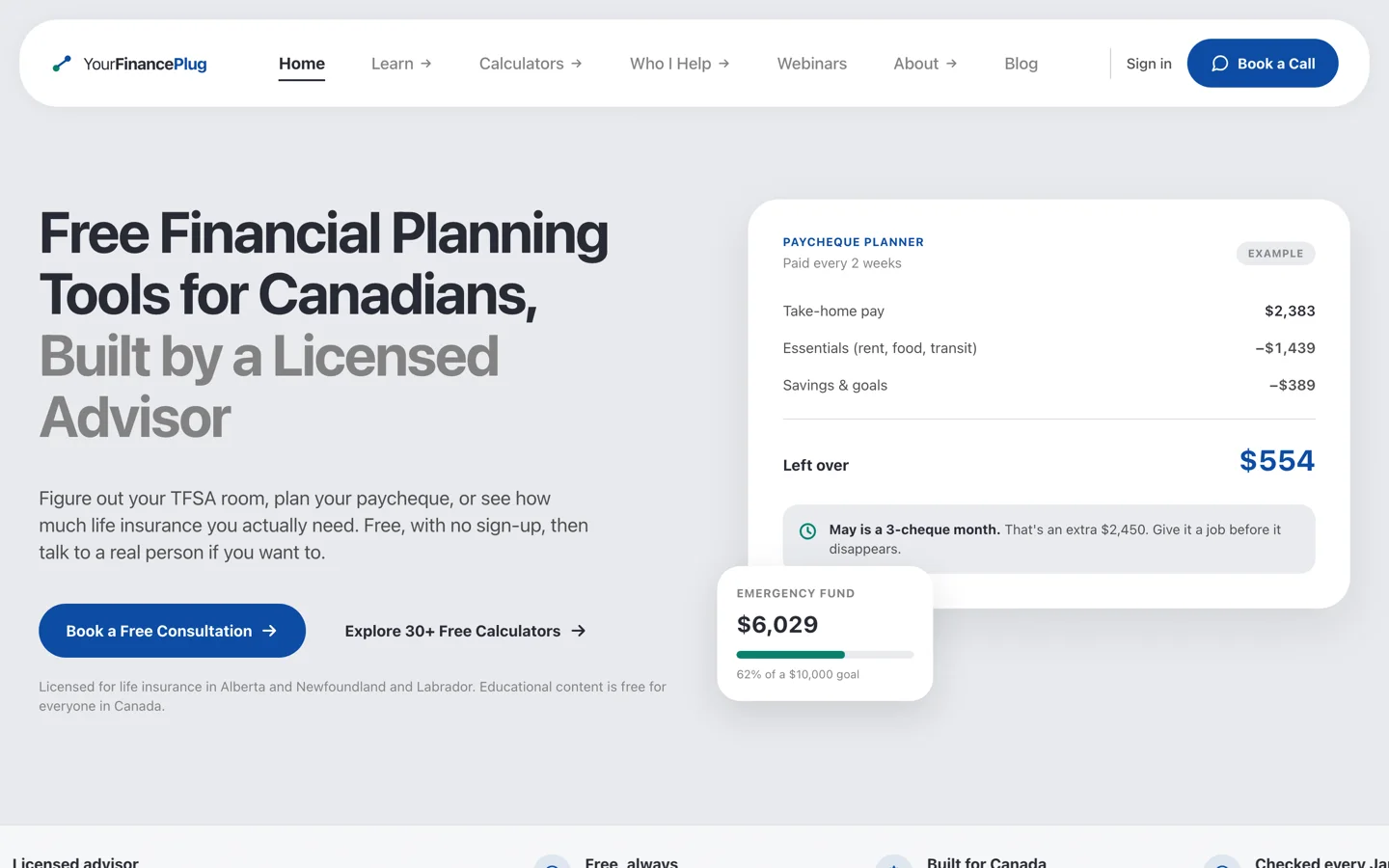
YourFinancePlug
Built YourFinancePlug, a 100-page financial planning platform for a licensed Canadian advisor, with 33 free calculators, a verified-data system that refuses to publish any government figure without a source and a date behind it, and a backoffice the client runs without a developer.
33Free Calculators
170Sourced Government Figures
-
PORTFOLIO WEBSITE
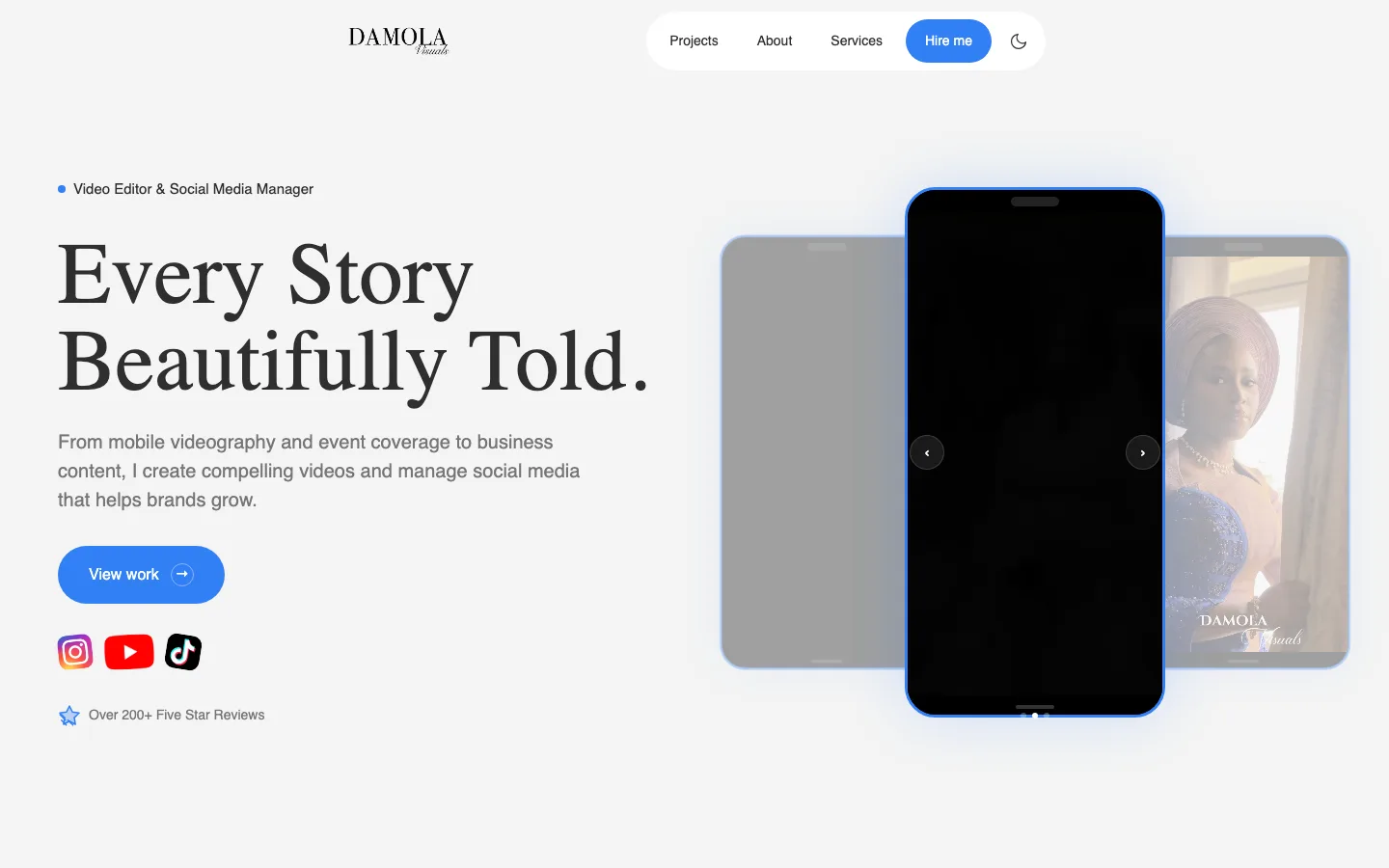
Damola Visuals
Built an elegant portfolio website for a video editor and social media manager, with vertical video showcases, dedicated project pages, light and dark modes, and an admin dashboard for publishing new work in minutes.
200+Five Star Reviews
What You Get
What's Included When We Build Your Website
Hiring a website developer should get you more than a good-looking design. Every project with Website Developer Tech includes the build, the SEO groundwork, your own admin dashboard and at least two months of support after launch, whether you need a business website, an online store or a school website with a results portal.
Ready to rank from launch day, and yours to run from day one.
Included in every website project
-
A professional design built around your brand
-
Fast, mobile-first pages
-
SEO built in from the start
-
Your own admin dashboard
-
HTTPS, secure forms and full testing
-
Google tools set up for you
-
At least 2 months of SEO support
Client Reviews
What Our Clients Say on Google
Every review below is a real Google review of Website Developer Tech, quoted word for word. You can read them all on our Google Business Profile.
5.0
Based on 8 Google reviews
Also listed on
Read all our reviews on Google-
Gideon StrathmoreGoogle review · Aug 2026 Website Developer Tech is a great website development company and i will love to work with them over and over again.
-
Adejola AdedejiGoogle review · Aug 2026 Website Developer Tech is extraordinary when it comes to building your website, not just building alone, they will give you 2month SEO support and trust me you will rank on Google Page 1.
dem too sabi, they are the best website developer in nigeria -
Fuhad AdekanbiGoogle review · Aug 2026 Website Developer Tech are very good when it comes to building seo optimized website.
When it comes to building and ranking your website to Google Page 1, I highly recommend them.
Dem too sabiiiiiii
They are the best website development company in Lagos
Other Services
Other Website Services We Offer
Every service comes with the same admin dashboard and SEO support. Compare all our web development services.
-
Business Website Design
Company and corporate websites with a dashboard you control.
-
Custom Web Applications
Booking systems, portals and dashboards built in Laravel.
-
School Website Development
School websites with result checkers, admission portals and fee payment.
-
WordPress Website Design
WordPress and WooCommerce sites, built properly and kept fast.
-
SEO Services
Technical SEO, on-page optimisation and local SEO for Google.
-
Website Maintenance & Support
Updates, backups, security checks and fixes after launch.
Frequently Asked Questions
Questions About Ecommerce Website Development
Straight answers to what clients ask us before they start.
How much does an ecommerce website cost?
Our ecommerce websites start from ₦400,000 as a one-time project fee, including payment gateway setup, the admin dashboard and two months of SEO support. Large catalogues and custom marketplaces are quoted for what you need. See our website prices.
Should I choose WooCommerce or a custom store?
WooCommerce suits a manageable catalogue and a quicker launch. A custom Laravel store makes more sense once you have thousands of products, several unrelated departments or a checkout that does not fit a normal shop. We recommend one honestly after seeing your catalogue.
Can I manage my products and orders easily?
Yes. Your store comes with an admin dashboard where you can add products, update prices, track orders and manage inventory yourself, with no developer needed for everyday changes.
Which payment gateways can you integrate?
Paystack, Flutterwave, Monnify and Opay for Nigerian customers, and Stripe or PayPal for customers abroad. Each one is tested with real transactions before launch.
Can you set different delivery fees for different areas?
Yes. We set up delivery zones with their own fees, for example different parts of Lagos and other states, plus pickup from your shop, all calculated at checkout.
Are your online stores secure?
Yes. We build with secure payment gateways, SSL encryption and safe coding practices to protect your customers' data and transactions.
Do you optimise my store for SEO?
Yes. Every ecommerce site includes at least two months of hands-on SEO after launch, covering product pages, site structure and page speed so your store can actually be found on Google.
Can you fix or take over my existing WooCommerce store?
Yes. We take over WooCommerce stores that were set up badly, are slow, or were abandoned by whoever built them, and we start with a check of speed, plugins, payments and security.
Prices shown are for projects in Nigeria, in naira. If your business is based outside Nigeria, see our pricing for international clients.
Still have a question? Ask us directly or read the full FAQ.
Contact Us
Let’s Build Your Ecommerce Website
Tell us what you sell, roughly how many products you have and how you deliver. We will come back with a free consultation, a WooCommerce or custom recommendation, and a quotation.
-
Call us+234 813 545 7984
-
WhatsAppChat with us on WhatsApp